What Are 5ah9.6max0 Python Software Requirements? Complete Setup Guide
Published: 8 Mar 2026
If you searched for what are 5ah9.6max0 python software requirements, you may have noticed that very little clear information exists online. Many pages either ignore the term or discuss general Python tools without explaining how this identifier fits into a development environment.
In most cases, 5ah9.6max0 appears as a project-specific identifier, configuration label, or internal module reference used in a Python-based system. It may represent a specific build, environment setup, or dependency configuration required to run a Python application.
Understanding the software requirements for Python projects like 5ah9.6max0 helps developers install the right tools, avoid compatibility problems, and maintain stable development environments.
This guide explains everything in simple terms, including Python development tools, environment setup, libraries, system requirements, and troubleshooting tips.
Understanding the Term “5ah9.6max0” in Python Projects
The identifier 5ah9.6max0 is not a built-in Python keyword. Instead, it usually appears as a technical reference used inside development projects.
In many software environments, labels like this are used to identify:
- Internal module identifiers
- Build versions
- configuration references
- dependency environments
- software release tags
Developers often assign codes like this to track specific configurations in large projects.
For example, a Python system may require a certain environment configuration labeled 5ah9.6max0 to ensure the correct versions of libraries and tools are used.
Core Python Software Requirements
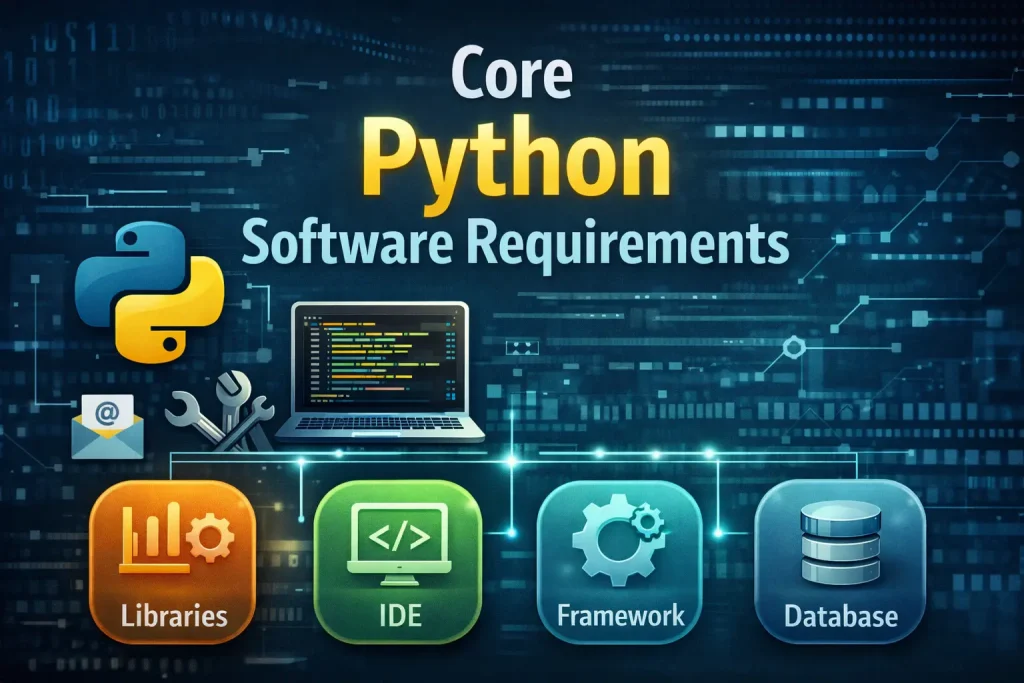
Before running any Python-based project or environment, certain basic software components must be installed.
1. Python Interpreter
The Python interpreter executes Python code and is the foundation of every Python project.
Recommended versions include:
- Python 3.8
- Python 3.9
- Python 3.10 or later
The interpreter performs several important functions:
- Running Python scripts
- Managing execution environments
- Supporting external libraries
Always download Python from the official Python website to avoid compatibility or security issues.
2. Python Package Manager (pip)
Most Python applications rely on external libraries.
The pip package manager allows developers to install and manage these dependencies.
Typical uses include:
- Installing required packages
- Updating libraries
- Managing project dependencies
Example command:
pip install package-name
pip is essential for maintaining Python dependency requirements.
3. Code Editor or Python IDE
A development environment helps programmers write, test, and debug code efficiently.
Popular Python development tools include:
- Visual Studio Code
- PyCharm
- Sublime Text
- Atom
These editors offer useful features such as:
- syntax highlighting
- debugging tools
- code completion
- project organization
Many developers prefer VS Code because it is lightweight and customizable.
Additional Tools for Python Development Environments
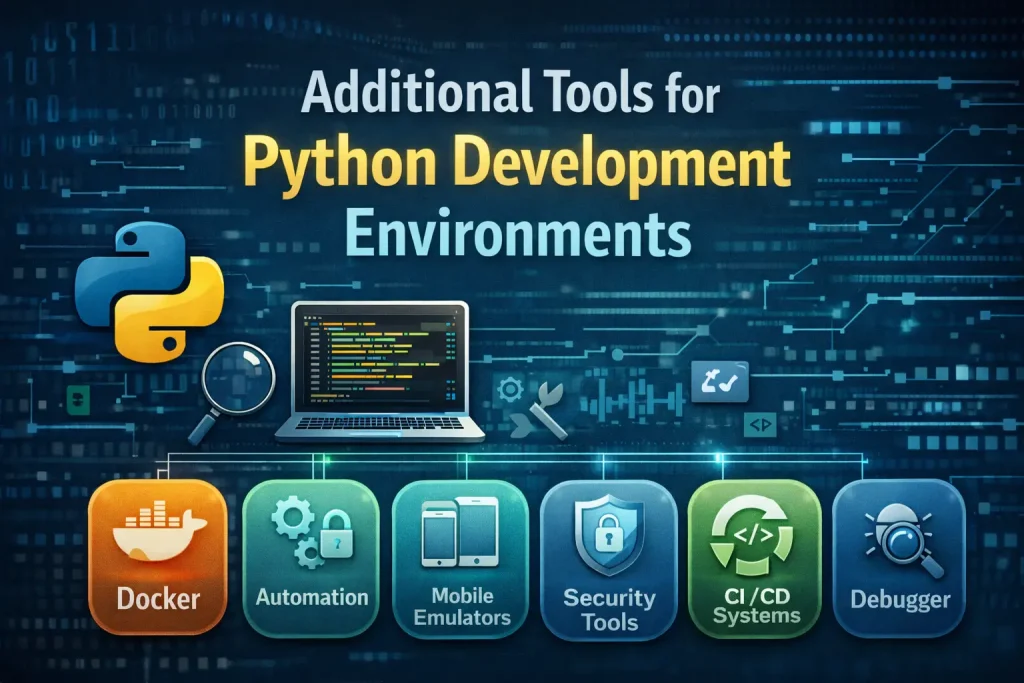
Complex Python systems often require additional tools to maintain stability and workflow efficiency.
Virtual Environments
Virtual environments isolate project dependencies.
This prevents conflicts between different Python projects.
Benefits include:
- separate dependency management
- easier project maintenance
- cleaner development environments
Common tools include:
- venv
- virtualenv
- conda
Example command:
python -m venv project-env
Virtual environments are considered a best practice for Python development.
Version Control Systems
Most professional Python projects use version control systems.
The most widely used tool is Git.
Version control helps developers:
- track code changes
- collaborate with teams
- restore previous project versions
Platforms such as GitHub and GitLab host project repositories and support team collaboration.
Python Libraries Often Required in Projects
Many Python applications rely on external libraries for additional functionality.
Common libraries include:
| Library | Purpose |
| NumPy | Scientific computing |
| Pandas | Data analysis |
| Requests | API communication |
| Flask | Web applications |
| Django | Full web frameworks |
Specific Python modules may require additional dependencies depending on the project configuration.
System Requirements for Python Development
Python runs on most modern systems, but some minimum requirements are recommended.
| Requirement | Recommended |
| RAM | 4 GB or higher |
| Storage | 2 GB free space |
| Operating System | Windows, Linux, macOS |
| Processor | Dual-core or higher |
Python is lightweight, so even low-spec computers can run most development environments smoothly.
Step-by-Step Python Environment Setup
Follow these steps to create a stable Python development environment.
Step 1: Install Python
Download Python from the official website and run the installer.
During installation, enable the option:
“Add Python to PATH.”
This allows your operating system to recognize Python commands.
Step 2: Verify Python Installation
Open a terminal or command prompt and run:
python –version
If the version number appears, Python was installed successfully.
Step 3: Install Required Libraries
Use pip to install essential packages.
Example:
pip install numpy pandas flask
This installs common Python dependencies used in many projects.
Step 4: Create a Virtual Environment
Create an isolated environment for your project.
python -m venv project-env
Activate the environment before running the project.
Step 5: Run the Python Project
After installing dependencies and configuring the environment, run your program:
python main.py
This executes the Python script within the configured environment.
Common Python Setup Problems and Fixes
Many developers encounter issues when setting up Python environments.
Python Command Not Found
Solution:
- reinstall Python
- ensure Python is added to the system PATH
Library Installation Errors
Solution:
- update pip
pip install –upgrade pip
- check internet connection
- confirm compatibility with your Python version
Dependency Conflicts
Solution:
Use virtual environments to isolate project libraries.
Best Practices for Managing Python Requirements
Following best practices prevents many common development issues.
Keep Python Updated
Regular updates improve security, performance, and compatibility.
Use Virtual Environments
Isolated environments prevent dependency conflicts between projects.
Track Dependencies with requirements.txt
You can export all project dependencies using:
pip freeze > requirements.txt
Other developers can then install the exact environment using:
pip install -r requirements.txt
This method simplifies Python project setup and dependency management.
Why Understanding Python Software Requirements Matters
Properly configuring Python environments helps developers:
- avoid installation errors
- maintain stable projects
- manage dependencies effectively
- improve development productivity
Even small Python applications may fail without the correct environment setup.
FAQs: What are 5ah9.6max0 Python Software Requirements
Python software requirements include the interpreter, development tools, libraries, and system configuration needed to run Python applications.
The term usually represents a project-specific identifier or configuration label used to track environments, modules, or build versions.
No, but using an IDE makes development easier because it offers debugging tools, auto-completion, and project management features.
Yes. Python is lightweight and can run on systems with 2–4 GB of RAM, although larger projects may require more resources.
Final Thoughts
Python 3.9 or newer is recommended because it provides better performance and long-term support.
Understanding what are 5ah9.6max0 python software requirements helps developers properly configure their Python development environment. While the identifier itself may represent a project-specific configuration or build reference, the essential setup remains the same: installing Python, managing dependencies, and maintaining a stable development environment.
By following the setup steps and best practices in this guide, developers can run Python applications smoothly, avoid common installation errors, and maintain organized project environments.



- Be Respectful
- Stay Relevant
- Stay Positive
- True Feedback
- Encourage Discussion
- Avoid Spamming
- No Fake News
- Don't Copy-Paste
- No Personal Attacks
- Be Respectful
- Stay Relevant
- Stay Positive
- True Feedback
- Encourage Discussion
- Avoid Spamming
- No Fake News
- Don't Copy-Paste
- No Personal Attacks
